
ICCRSSF

Time To Learn

2nd International Conference on Climate Resilient, Smart and Sustainable Futures

12 to 14 August 2026, Elephant Hills, Victoria Falls, Zimbabwe

About this Event

ICCRSSF Conference

The 2nd International Conference on Climate Resilient, Smart and Sustainable Futures (ICCRSSF 2026), hosted by the Great Zimbabwe University (GZU) builds on the momentum of the inaugural ICCRSSF 2025 hosted by the Vaal University of Technology (VUT). The conference continues to be anchored in a strong network of collaborating institutions, including the National Research Foundation (South Africa), The Presidential Climate Change Commission (South Africa), University of South Africa (UNISA), University of Fort Hare (UFH) , Cape Peninsula University of Technology (CPUT), Botswana University of Agriculture and Natural Resources, and Maasai Mara University (Kenya), among others as it addresses the accelerating challenges posed by climate change.

ICCRSSF 2026 convenes at a critical period for our planet due to the escalating climate crisis, which demands a paradigm shift from siloed discussions to integrated approaches. The ICCRSSF 2026 theme magnifies designing systems for accelerating climate-resilient and sustainable societies. The focus is on tangible solutions, cross-sectoral partnerships, and just transitions that leave no one and no place behind. The conference provides a platform for transdisciplinary dialogue, knowledge exchange, and collaborative innovation.

ICCRSSF 2026 welcomes researchers, practitioners, policymakers, industry experts, innovators, development agencies, students, civil society, indigenous communities, and international organizations to submit abstracts for original papers, case studies, and proposals that address the urgent need for resilience, sustainability, and smart solutions in the face of climate change.

Conference Thematic Areas

The conference invites high-quality contributions addressing, but not limited to, the following sub-themes:

Sub-Theme 1: Climate Impact, Financing, Resilience-building and Mitigation

  • Innovative and scalable approaches to co-designed, co-created and co-delivered climate adaptation and mitigation.

  • Nature and ecosystem-based solutions for climate resilience.

  • Localizing climate action and enhancing community resilience.

  • Climate change, biodiversity conservation and ecosystem health.

  • Water security, agriculture, and climate-proofed food systems

  • Climate change and economic systems.

  • Just (Energy) Transitions and socio-economic transformation.

  • Resilience in dryland agriculture, rangelands, and pastoralist systems.

  • Innovative financing and financial engineering for climate resilience-building, adaptation and mitigation.

Sub-Theme 2: Sustainable Development and the 2030 Agenda

  • Strategies for accelerating progress on the Sustainable Development Goals (SDGs).

  • Aligning national and regional policies with global sustainability goals.

  • Monitoring and evaluation of sustainable development initiatives.

  • Environment Sustainability and Governance (ESG) under the 2030 Agenda for Sustainable Development

  • National and local voluntary reviews and institutional capacity strengthening Universal Design for Learning, EdTech and digital transformation for education

Youth leadership, capacity building, and interdisciplinary research for sustainable futures, climate communication, public engagement, and climate literacy.

Sub-Theme 3: Smart Change and Digital Transformation for Sustainability

  • Applications of AI, IoT, robotics, and big data for climate and environmental solutions. Smart technologies for rural and urban development

  • Digital tools for climate modelling, monitoring, and decision support.

  • Technological innovations for disaster risk reduction and early warning systems

  • Data Science, AI and technological revolution for sustainable development

  • Climate information systems and services

Sub-Theme 4: Legal and Policy Frameworks for Resilient and Sustainable Futures

  • Policy and legal frameworks for smart change and digital transformation for sustainability

  • Policy and legal frameworks for heritage, tourism, aviation and hospitality under SDGs and climate

  • Policy and legal frameworks for sustainable development post 2030 agenda

  • Policy and legal frameworks and governance for inclusive and climate-resilient futures

  • Equity, justice and inclusive policy designs

Sub-Theme 5: Heritage, Education, Tourism, Aviation and Hospitality under SDGs and Climate Change

  • Preservation of cultural and natural heritage amid climate change.

  • Sustainable tourism development and management.

  • Policy Frameworks for Climate-Responsive Tourism.

  • Tourism, aviation, events, sports, hospitality and conservation as catalysts for sustainable development.

  • Innovative approaches to heritage conservation and sustainable tourism development.

  • Aviation management in the era of Tourism and Climate Change

  • Tourism, Climate Justice, and Local Communities.

  • Resilient Hospitality Management.

  • Youths and Climate Action

  • Food safety, nutrition & rural livelihoods under climate stress

  • Dryland agriculture & rangeland ecosystems

Submission Guidlines

We welcome submissions from academics, professionals, civic society organizations and policymakers across the globe. Contributions may take the form of:

  • Research Papers: Original research findings, theoretical discussions, Systematic reviews and case studies.

  • Poster Presentations: Visual representations of innovative projects, research, or fieldwork.

  • Working Groups, Panels and Roundtables: Discussions on critical issues and emerging trends in climate resilience and sustainability.

  • Lightning Talks: Short (5 minutes) high-energy presentations sharing key findings.

Important Deadlines

    • Abstracts Submission Opens: 15 January 2026

    • 1st Abstract Call Closes: 30 April 2026

    • Final Abstract Deadline: 12 June 2026

    • Notification of Acceptance: 15 July 2026

    • Full Paper Deadline: 30 August 2026

    • Early Bird deadline: 31 May 2026

    • Formats: Research papers, case studies, technical notes, working groups, panels and roundtables, posters, field excursions, and policy briefs.

    • Length: Abstract (250-300 words and address one or more conference themes). Full Journal articles and book chapters (5,000-7,000 words) and Conference Proceedings 2500-5000.

    All submissions must be original and not previously published, and must be submitted on the following link https://event.fourwaves.com/iccrsf/submission

Conference Fees


  • The following conference fees will apply for delegates to this Conference

    International Delegates

    • International Delegate = US$500.00

      Early Bird = US$450.00

    • International Student Delegate = US$300.00

      Early Bird = US$250.00

    Local Delegates

    • Local Delegate = US$450.00

      Early Bird = US$400.00

    • Local Student Delegate = US$250.00

    • Early Bird = US$200.00

           
NB// Accomodation at Elephant Hills can only be booked through Great Zimbabwe University through a combo package of conference fee for:
  • International delegates 500usd,
  • International Students 300usd,
  • accomodation 1000usd for 5nights

Special Publications

    • Springer Nature Conference Proceedings Publications (DHET Accredited)

    • Conference Springer Nature Edited Book Chapter Contribution (DHET Accredited)

    • Dzimbabwe Journal of Multidisciplinary Research

    • The Journal for Transdisciplinary Research in Southern Africa (DHET Accredited)

    • Sustainability (MDPI) DHET Accredited

    • Discover Sustainability Springer Scopus Indexed and DHET Accredited

    • Sustainability MDPI Scopus Indexed and DHET Accredited

    • Discover Cities

    • Springer (DHET accredited )

Our Speakers

Professor Mandivamba Rukuni

Chairman, Great Zimbabwe University Council

VC

Professor Rungano. J . Zvobgo

Vice-Chancellor, Great Zimbabwe University (Zimbabwe)

Prof Stephen Khehla Ndlovu

Prof Stephen Khehla Ndlovu is Vice-Chancellor and Principal of Vaal University of Technology (VUT) in Vanderbijlpark, South Africa.

Professor Thulani Dube

Pro-Vice-Chancellor at Lupane State University (LSU) in Zimbabwe
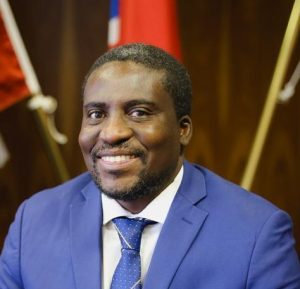
Professor Kenneth K Matengu

Vice-Chancellor of the University of Namibia, President of the Pan-African University (PAU) Council,
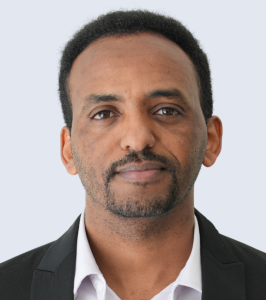
Prof. Dr. Zindoga Mukandavire

Acting Deputy Vice-Chancellor, Research and Postgraduate Programmes and Director of Research

Professor Onisimo Mutanga

Remote Sensing and South African Research Chair (SARCHI) in Landuse

Dr. Yacob T. Tesfaldet

Environmental Data Scientist and Researcher
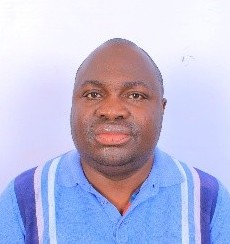
Prof. Alen Manyevere

Soil Scientist and Environmental Conservationist
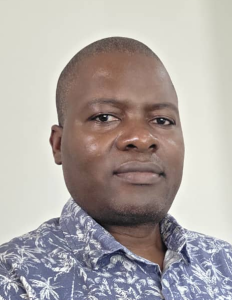
Professor Kaitano Dube

Full Professor of Tourism Geography at Vaal University of Technology, South Africa and Visiting Professor at Emirates Aviation University, Dubai, United Arab Emirates

Professor Timothy Dude

Director, Institute For Water Studies, University of the Western Cape, South Africa
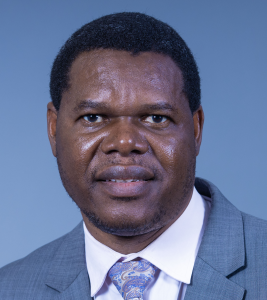
Professor Godwell Nhamo

Acting Head, Institute For Sustainability And Corporate Citizenship, University of South Africa
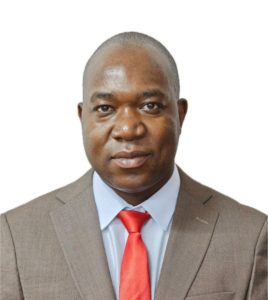
Professor Edson Gandiwa

Director General of the Zimbabwe Parks and Wildlife Management Authority (ZimParks)

Prof Ikechukwu O. Ezeuduji

Department of Recreation and Tourism, University of Zululand
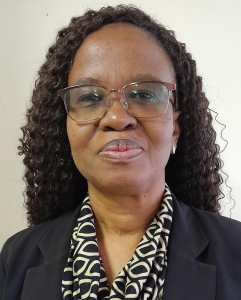
Professor W.L Hambira

Associate Professor of Environmental Management at the Botswana University of Agriculture and Natural Resources (BUAN), Botswana

Dr. Nomhle Ngwenya

Independent Climate Change and ESG Expert & Researcher at Wits Business School, South Africa

Dr. Mahlomola E. Daemane

General Manager, Wildlife and Strategic Support South African National Parks (SANParks), South Africa

Dr. Webster Gumindoga

Researcher in Spatial Hydrology, Earth Observation and Water Resources Management University of Zimbabwe

Dr. Ariel Toh

Director Sustainability Marcharh Research Centre -- MICS & SSEC

Mr Ntandokamlimu Nondo

Senior Environmental Officer, Environmental Management Agency

Cristina Petracchi

Food and Agriculture Organization of the United Nations

Scientific Committee

Name 

Institution

Country

Research area

Prof Tanyaradzwa Chigonda

Great Zimbabwe University

Zimbabwe

Climate change mitigation and adaptation, Biodiversity conservation and sustainable utilisation, Environmental management

Dr. Paul Sambo

Great Zimbabwe University

Zimbabwe

Artificial Intelligence, Data Communication, and Internet of Things related to  climate change

Prof Ellen Ganga 

Great Zimbabwe University

Zimbabwe


Prof Vongai Zvidenga Nyawo 

Great Zimbabwe University

Zimbabwe


Dr. Hardlife Zinhiva 

Great Zimbabwe University

Zimbabwe


Dr. Ngavaite Chigede

Great Zimbabwe University

Zimbabwe

Animal Science and Production, Poultry gut health and immunity

Dr. Godfrey Mutowo

Great Zimbabwe University

Zimbabwe

Remote Sensing, GIS, Climate change and Land degradation, Ecosystems management, Environmental change and modelling

Dr. Lawrence Sawunyama

Great Zimbabwe University

Zimbabwe

Development of advanced sustainable materials, particularly ceramic membranes and photocatalysts, for wastewater treatment, environmental remediation, and circular-economy applications.

Dr. Isaac Nyambiya

Great Zimbabwe University

Zimbabwe

Green chemistry, health reform, water circular economy, microplastic research and public health and sustainable  development

Dr. Garikai Makuyana

Great Zimbabwe University

Zimbabwe


Dr. Clarice Mudzengi

Great Zimbabwe University

Zimbabwe

Climate Change  impacts on Agricultural systems

Ms Linet Ndou

Great Zimbabwe University

Zimbabwe

Climate Induced Migration and Youth Bulge:Integrated Pathways to sustainable livelihoods in Beitbridge District, Zimbabwe 

Mr Nkosana Maphosa

Great Zimbabwe University

Zimbabwe


Dr Onalenna Gwate

Lupane State University

Zimbabwe

Understanding and managing socio-ecological systems in dryland and mountain landscapes of southern Africa. I investigate the interactions among biodiversity, water resources, biological invasions, ecosystem restoration, climate change, and rural livelihoods to develop nature-based solutions that enhance ecosystem resilience and sustainable development.

Dr Wayne Malinga 

Lupane State University 

Zimbabwe 

Climate change mitigation and adaptation, Indigenous Knowledge Systems, Climate Resilience, Natural Resources Management, Climate Governance, Sustainable Development, Rural Development and Livelihoods, Water Resources Management, Environmental Stewardship, Climate Policy 

Nkululeko Mpofu

Lupane State University 

Zimbabwe 

  • Food systems
  • Smallholder adaptive capacity
  • Smart agriculture
  • Prepared water
  • Livestock markets
  • Cookstoves value chains

Dr. Bright Chisadza 

Lupane State University 

Zimbabwe 

Climate resilience, climate adaptation, hydrology and water resources management, GIS and remote sensing, drought risk management, sustainable agroecosystems, water-food-energy systems, and climate-smart agricultural engineering. 

Prof Zindoga Mkandawire

Emirates Aviation University

United Arab Emirates

Research focuses on mathematical and computational modelling to address complex challenges in aviation, biology, and public health. In aviation, interests include data analytics, optimization, safety, and risk modelling, sustainability, and the use of artificial intelligence to enhance operational efficiency and decision-making. Collaborates in interdisciplinary work aimed at delivering practical, evidence-based solutions with industry and societal impact. 

Dr. Shem Wambugu Maingi

Kenyatta University

Kenya

Sustainable Tourism

Dr. Wame L. Hambira

Botswana University of Agriculture and Natural Resources

Botswana

Climate change, Sustainable Development

Dr. Thsinakaho Sunday

Cape Peninsula University

South Africa

Hospitality and Tourism

Prof. Kevin Mearns

University of South Africa

South Africa

Environmental Management

Dr. Teboho Pitso

Vaal University of Technology

South Africa

Education

Dr. Felicia Naatu

SD Dombo University of Business and Integrated Development Studies

Ghana

Marketing and Sustainable Consumption and CSR

Prof. Frederick Dayour

SD Dombo University of Business and Integrated Development Studies

Ghana

Tourism and Community Development, ICTs and Tourism, Sustainable Tourism, CC and Resilience and Consumer Perceived Risk in Hospitality and Tourism

Dr. Dramani J.M. File

SD Dombo University of Business and Integrated Development Studies

Ghana

Climate Change and Agriculture, Local and Indigenous Knowledge and  Climate Change, DRR

Prof. Klaus Hubacek

University of Groningen

Integrated Research on Energy, Environment and Society (IREES).

Netherlands

Conceptualising and modelling the interactions between human and environmental systems.

Prof. Yuli Shan

School of Geography, Earth and Environmental Sciences, University of Birmingham

United Kingdom

Climate Change Mitigation and Sustainable Transitions

Dr. Clarice Mudzengi

Research and Innovation Department, Great Zimbabwe University

Zimbabwe

Climate Change impacts on Agricultural systems

Dr. Indrani Roy

University College of London

United Kingdom

Atmospheric Science

Dr. Raymong Mugandani

Department of Land and Water Management, Midlands State University

Zimbabwe

Climate Science, water and land management

Dr. H Zinhiva

Department of Physics, Geography and Environmental Science

Zimbabwe

Environmental management

Dr. Emmanuel Matahe

University of Johannesburg

South Africa

Developmental studies, Tourism,

Agriculture

Dr. Cathrine Kifworo

Maasai Mara University

Kenya

Tourism

Dr. Lesego S Stone

University of Botswana

Botswana

Natural Resources Management

Prof. Ikechekwu O Ezeuduji

University of Zululand

South Africa

Tourism and Rural Development

Dr. Nyaigoti Omwoyo

Maasai Mara University

Kenya

Environmental Chemistry/Science

Dr. Precious Chikezie Ezeh

Federal University Gusau

Nigeria

Tourism Marketing

Dr. Justus Wesonga

Maasai Mara University

Kenya

Human Resource Management and Climate Change

Dr.Olubunmi A Afinowi

University of South Africa

South Africa

Sustainable Development, Climate Change Governance, Marine and Coastal Governance

Prof. Francis Mburu

Deputy Vice-Chancellor, Research, Innovation and Outreach,

Maasai Mara University

Kenya

Natural Resource Management; Wood science and climate change

Prof. Godwell Nhamo

University of South Africa

South Africa

Climate Change Loss and Damage Disaster Risk Reduction SDGs Coastal Resilience and Livelihood Security

Dr. Regis Musavengane

Free State University

South Africa

Sustainability Africa Natural ResourcesTourismClimate Change and community development

Dr. Erisher Woyo

Manchester Metropolitan University

Britain

Distressed destinations Higher education tourism

Dr. Tafadzwa Matiza

North-West University

South Africa

Nation brandingTravel behaviourTourism brand marketing

Prof. David Chikodzi

Great Zimbabwe University

Zimbabwe

Environmental Science, Geography, Remote Sensing, Climate Change

Dr. Lazarus Chapungu

University of South Africa

South Africa

Climate change Sustainable development biodiversity tourism environmental policy

Prof. Zindoga Mukandavire

Emirates Aviation University

United Arab Emirates

modelling, epidemiology, biostatistics

Prof. Fulufhelo Netswera

Durban University of Technology

South Africa

Public governance Entrepreneurship Philanthropy Higher Education PolicySocial Sciences Methods

Mhlangabezi Slayi

University of Fort Hare

South Africa

Smallstock management rangeland restoration beef production plant-animal interaction livelihoods

Admire R. Dzvene

University of Fort Hare

South Africa

Agronomy, Agrometeorology, Cover crops, Intercropping, Soil water management

Dr. S. Muchaku


Dr. Ngoni Courage Shereni

University of Johannesburg

South Africa

Sustainable Tourism, SDGs Climate Change, Collaborative Resource Management Practices, Tourism exhibitions

Dr. Aurobindo Ogra

University of Johannesburg

South Africa

Spatial TransformationSmart CitiesUrban PlanningUrban InfrastructureUrban Development

Scroll to Top